EdgeInnovate Blog · Restaurants
Your bestselling delivery dish sells well. What does it earn?
EdgeInnovate Team · · 5 min read
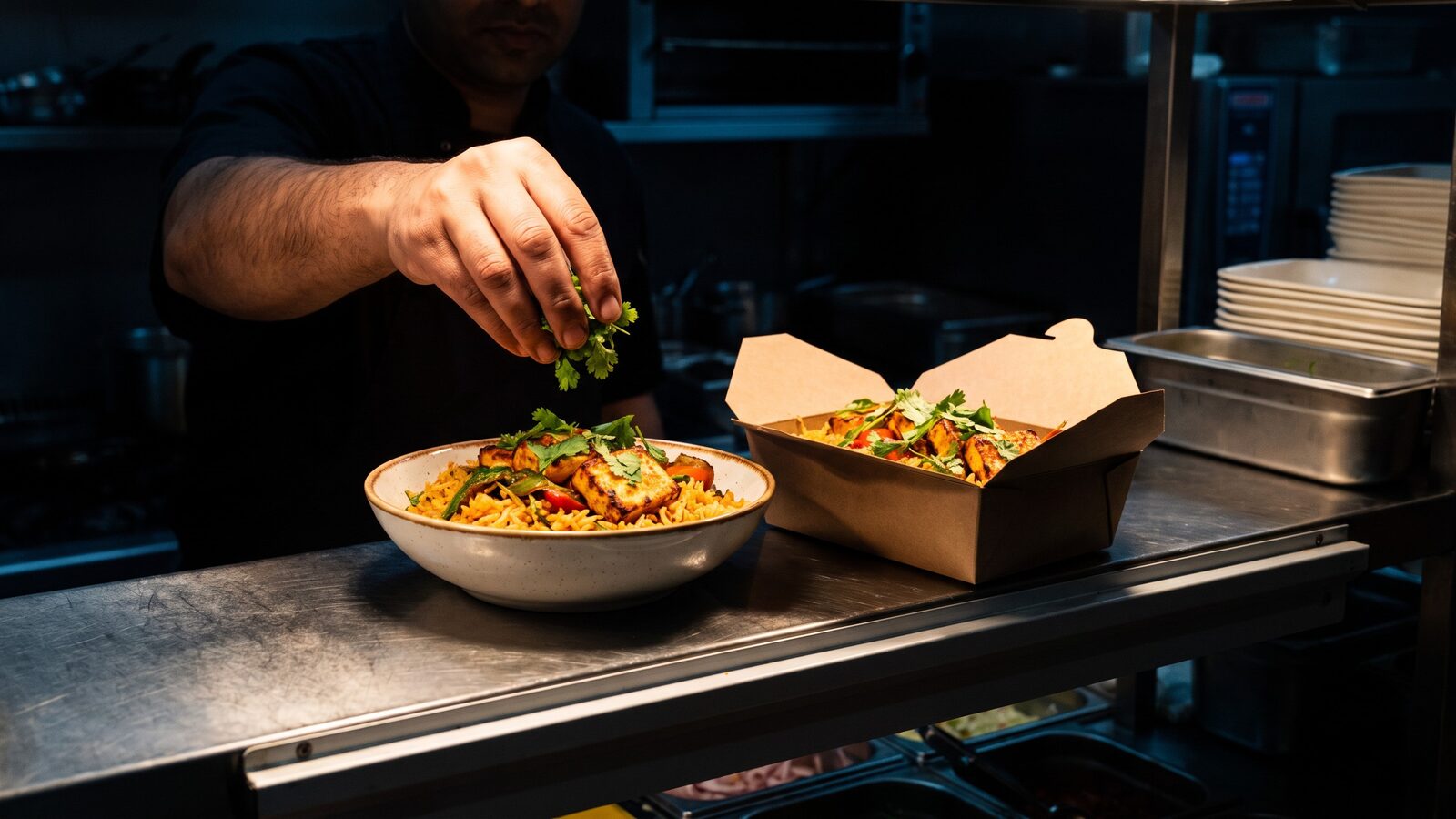
To find what a delivery dish contributes, take the revenue the restaurant earns on the order and subtract the costs that move with that sale. Include ingredients, packaging, the restaurant-funded discount and relevant channel charges. Do the calculation separately for dine-in and delivery. The same paneer bowl can pay a very different share of the rent depending on how it leaves the kitchen.
Imagine an owner in Pune looking over Sunday’s orders. The paneer bowl topped the delivery list again. The kitchen wants a second packing station for the lunch rush. Before buying one, the owner has a smaller question to answer. What did those extra bowls earn?
How do you calculate contribution per dish?
Use a one-item order for the first pass. Pull the recipe cost, the packaging actually used and a settled order from the same period. The following figures are illustrative, in rupees, excluding taxes. The channel charge is an example from an assumed settlement. Use the charges in your own agreement and payout statement.
| Per paneer bowl | Dine-in | Delivery |
|---|---|---|
| Selling price before restaurant-funded discount | ₹300 | ₹300 |
| Restaurant-funded discount | ₹0 | ₹30 |
| Ingredients used | ₹92 | ₹92 |
| Packaging and disposables | ₹0 | ₹18 |
| Variable channel charges | ₹0 | ₹60 |
| Contribution before labour, rent and other costs | ₹208 | ₹100 |
At 30 delivery bowls, the dish contributes ₹3,000 on these assumptions. That might be worthwhile on a quiet Tuesday. At peak service, ask what else the kitchen could have made with that time. A ₹100 contribution on an order that uses a spare burner is a different decision from ₹100 on an order that ties up the only tandoor.
Where do menu calculations go wrong?
Start with the settlement. If you use a payout already reduced by the restaurant’s discount and the platform’s charge, subtracting both again understates the contribution. Check who funded each promotion. On a multi-item order, write down how you allocate a shared bag, discount or order-level charge. The method matters when one dish usually sells alone and another nearly always travels with two more items.
Then take the recipe card to the pass. Does the delivery portion get an extra dip, a foil lid and a paper sleeve? Does one batch yield 18 saleable portions when the costing sheet assumes 20? A manager who watches five orders leave can often explain a discrepancy that looks mysterious on a spreadsheet.
How can a restaurant use AI to test a menu change?
Give an AI assistant a small anonymised table of orders, current recipe costs and a list of fees. Ask it to show the calculation for one order, identify unknown costs and group the remaining orders by item and channel. Have the manager reproduce the first result from the settlement before acting on the rest.
In the example, suppose the team finds an equally sturdy pack that costs ₹6 less. Trial it for one service. At 30 bowls the potential saving is ₹180. Count leaks, refunds and repacking alongside the saving. One spilled lunch is a reason to inspect the pack before rolling it out across the menu.
Restaurant Edge is EdgeInnovate’s planning tool for restaurant owners. Owners upload a menu and answer eight questions to receive a personalised Restaurant AI Blueprint with a 90-day plan. If menu economics is your concern, take a settled order and a recipe card to the discussion with your chef. That gives the two of you a concrete starting point for choosing a pilot.
What the Restaurant AI Blueprint covers
Common questions
Is food cost percentage enough to compare dishes?
Food cost percentage tells you how much of the selling price goes into ingredients. Contribution per order includes the other variable costs you choose to track and shows the rupees left to cover overheads.
Should you remove a popular dish with a thin margin?
First check what customers buy with it, when they order it and what kitchen capacity it uses. A bowl often bought with a profitable drink may deserve a different decision from the same bowl sold alone on promotion.